Gravel Driveways in Moira, NY
Gravel and stone driveways for rural properties around Moira, Malone and the surrounding towns. New driveways cut in on raw land, and existing driveways regraded once the crown has gone flat and the ruts have taken over.
On a new build the driveway usually goes in early, because it is what gets machines, delivery trucks and concrete onto the property. Soft ground will not carry a loaded truck.
What decides whether a driveway lasts is the base under it and the crown that sheds water, not the stone you can see on top. Where water crosses the entrance a culvert goes in; your town highway department may specify the size, so it is worth asking before the driveway is built.
Get A Free Estimate
What the job covers
New driveways
Cut in from the road, graded, based and stoned, on lots where there was nothing before.
Culverts
Set at the road entrance so water runs under the driveway instead of across it.
Regrading
Existing driveways brought back to grade when the crown is gone and the ruts have taken over.
Get A Free Estimate
The base is the driveway
Stone spread over soft ground looks fine in August and disappears in April. What holds a driveway together is the base under it and the crown that moves water off it.
A driveway that washes out every spring is usually telling you about drainage rather than about stone. Adding more stone to a driveway that sheds water badly buys you a season.
Get A Free Estimate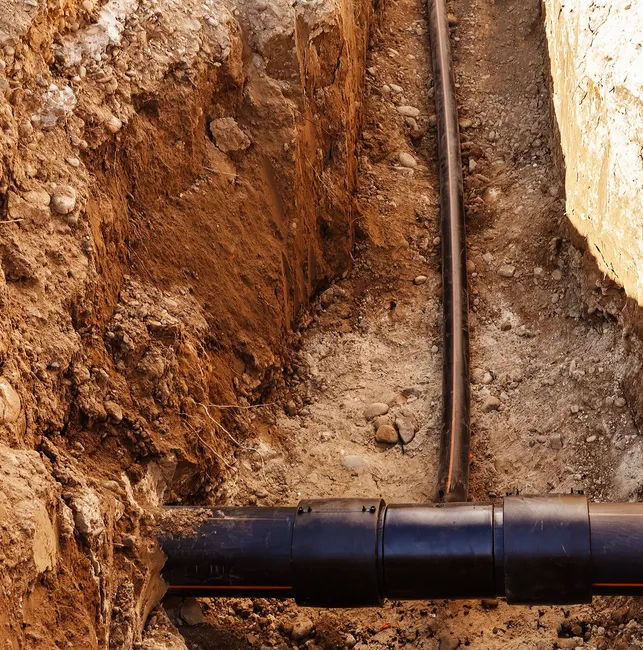
How a Driveway Goes In
We walk the line first: where the driveway runs, where it meets the road, and where water is going to want to cross it. On a raw lot this usually happens early, because the driveway is what gets everybody else onto the property.
Topsoil and soft material come off, because stone spread over that will simply disappear into it. A culvert goes in at the entrance where the drainage needs one, to the size the town wants. Then the base goes in and gets compacted, which is the part that decides whether the driveway is still there in April.
Surface stone goes on last and gets shaped with a crown, so water runs off the sides instead of sitting in the middle. A driveway that survives frost is built in layers rather than dumped in one go.
Get A Free Estimate
What Affects the Cost of a Driveway
Published figures put installed gravel driveways at roughly $1.25 to $4.00 a square foot, with crushed stone at about $120 to $255 a ton delivered and a culvert adding somewhere between $500 and $2,000. Those are national guide numbers rather than our price, but they show where the money sits.
On a rural lot it is the length that catches people out. A driveway two hundred feet back off the road is a different piece of work to a suburban apron, and width matters as well, because a delivery truck needs more room than a car. Soft or wet ground needs more base before it will hold anything, and that is material and machine time before a single stone of the surface goes down.
Stone is heavy and it comes by the ton, so how far it has to travel to reach your lot is part of the price whether anybody itemises it or not. We will walk the line with you and price the real job rather than a per-foot guess.
Get A Free Estimate
Areas We Serve
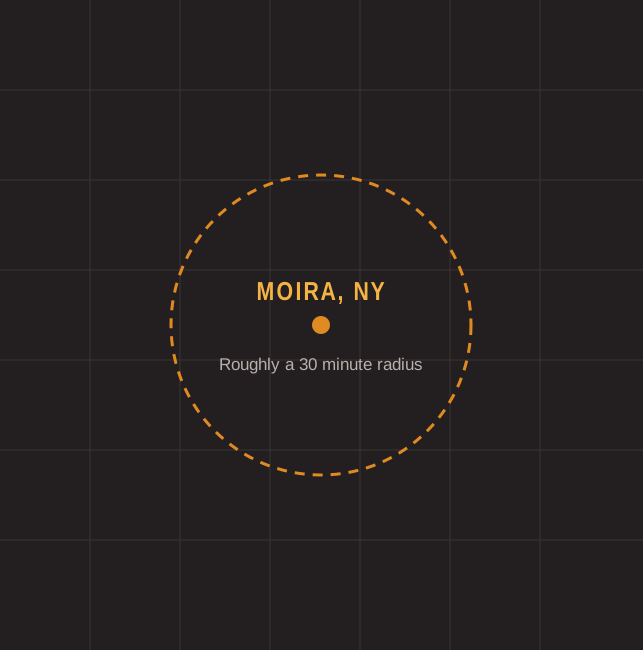
We do driveways across Franklin County and St. Lawrence County, out of Moira. The full list of towns is on our service area page.
- Moira, NY
- Brushton, NY
- Bangor, NY
- North Bangor, NY
- Dickinson Center, NY
- Bombay, NY
 Moira, NY
Driveways Questions
Cost guides put installed gravel driveways at around $1.25 to $4.00 a square foot, with a culvert adding roughly $500 to $2,000 where one is needed. Those are published ranges rather than our price. On a rural lot the length and the state of the ground underneath move the number more than anything else.
We build gravel and stone driveways. Gravel is also what most rural driveways up here want, because it can be regraded when frost moves it rather than cracking.
Thicker than most people expect, and built in layers rather than one dump of stone. A coarse base, a middle course and a finer surface, around twelve inches in total, is a common build. A thin single layer works fine until the first spring.
Usually. Washout is almost always a drainage problem rather than a stone problem, so the first thing we look at is where the water is going and whether the crown and the culvert are doing their job. Adding more stone to a driveway that drains badly just buys you another year.
If water crosses where your driveway meets the road, yes. Your town highway department may also require one and specify the size, so it is worth asking them before the driveway gets built rather than after.
Yes. When the crown has gone flat and the ruts have taken over, regrading brings the shape back. If the base underneath has failed, that is a bigger job and we will tell you so rather than sell you a fix that lasts a season.
Ready To Break Ground?