
Excavation in Norfolk, New York
Norfolk sits out on the flats along the Raquette River, on the same heavy clay ground as the rest of the lowlands.
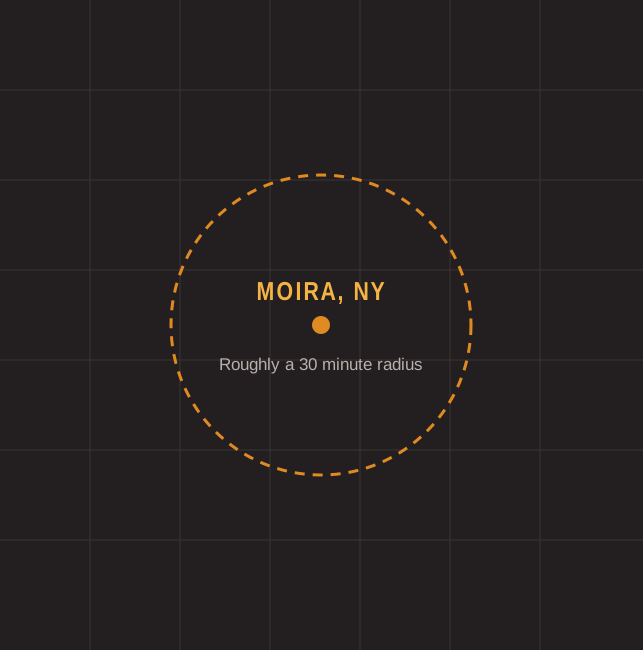
Norfolk is a run west from Moira, out on the St. Lawrence lowlands along the Raquette River. We handle septic systems, building pads, land clearing, driveways and the drainage work that flat, heavy ground tends to need.
On this side of the service area drainage stops being an optional extra. Ground that holds water needs the grade around a house set deliberately and drain lines that actually take water somewhere, and it is far cheaper to do that while the site is open than to retrofit it around a finished yard.
Get A Free Estimate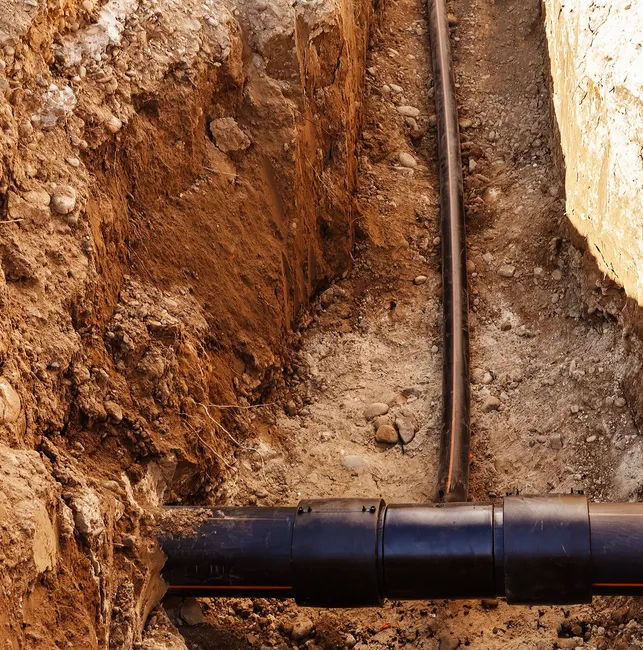
Why This Ground Holds Water
Norfolk sits on the St. Lawrence glacial marine plain, where the Champlain Sea left deep calcareous clays across the lowlands after the last glaciation. Those soils are clayey through the profile and drain poorly to somewhat poorly. Rain does not soak away through them at any speed, and the seasonal water table sits high.
That is the reason drainage matters so much here and the reason spring timing matters. A saturated clay site is a bad place to be running loaded machines: you churn it up, you lose compaction, and the site ends up worse than you found it. On this ground a realistic window is worth more than an early one.
Get A Free Estimate
Drain Lines, Grade And Septic
Three things move water on a property: the grade, the drain lines and the septic field, and on clay all three have to be planned together. Grade the ground away from the foundation, put drain lines in where the ground will not do the job on its own, and design the septic around a water table that is genuinely close to the surface.
New York's rules want four feet of usable soil above groundwater and bedrock and two feet under the absorption trenches, with the soil profile evaluated to six feet. On this ground a built-up field in imported fill is a common outcome, though only the soil test on your lot can confirm it. The field also has to sit at least a hundred feet from any private well.
Get A Free EstimateWhat We Do In Norfolk
Everything on a home site except the building itself. Pick the piece you need, or hand us the whole lot.
Get A Free Estimate Septic Systems
Norfolk Questions
Drain lines and outlets to move water away from a foundation are part of what we do. On this ground they are worth planning in from the start rather than adding later.
Most likely because the ground here is clay laid down by the Champlain Sea, which drains poorly and holds a high seasonal water table. It is normal for the area. What fixes it is grade and drain lines that give the water somewhere to go.
Somewhere lower than the foundation, and on ground this flat that is the part worth working out first. A drain line with nowhere to discharge to just moves the problem a few feet. It gets sorted at the walk-through, before anything is dug.
It goes by the job, because the length of the run and where the water has to go decide most of it. What is worth knowing is that drain lines cost a fraction while the site is open compared with retrofitting them around a finished yard.
Quite possibly. Norfolk sits on the same Champlain Sea clays as the rest of the lowlands, and New York needs four feet of usable soil above groundwater. Where the ground cannot give that, the field gets built up in imported fill. The soil test on your lot is what confirms it.
Other Towns We Cover
Norfolk is one stop on the run. The full list is on the service areas page.
View All Service AreasReady To Break Ground?